

Power to Attack Challenges
Anyone reading this knows that each day comes with some obstacle to navigate, difficulty to overcome, or failure from which to recover.
Training children to access POWER when attacking challenges prepares them to keep moving forward in accomplishing fun goals they set for themselves. However, many times the goals are unwanted or overwhelming. The challenge involves: deciding to complete the task; breaking down the task in small manageable steps, putting those steps in a logical order, prioritizing, solving problems, ignoring distractions, correcting mistakes, and enjoying the progress.
Observing others in this same task grease the wheels for getting the job done. When the child’s environment provides the time and space to experiment, they discover the key to motivation: even when meeting challenges, the effort is worth it.
“….being strengthened with all power according to his glorious might so you may have great endurance and patience…”
Colossians 1:11
Scripture ensures us we can be “strengthened with power leading to great endurance and patience”.
5 ways to attack challenges by appropriating POWER with success.
“P” stands for Play

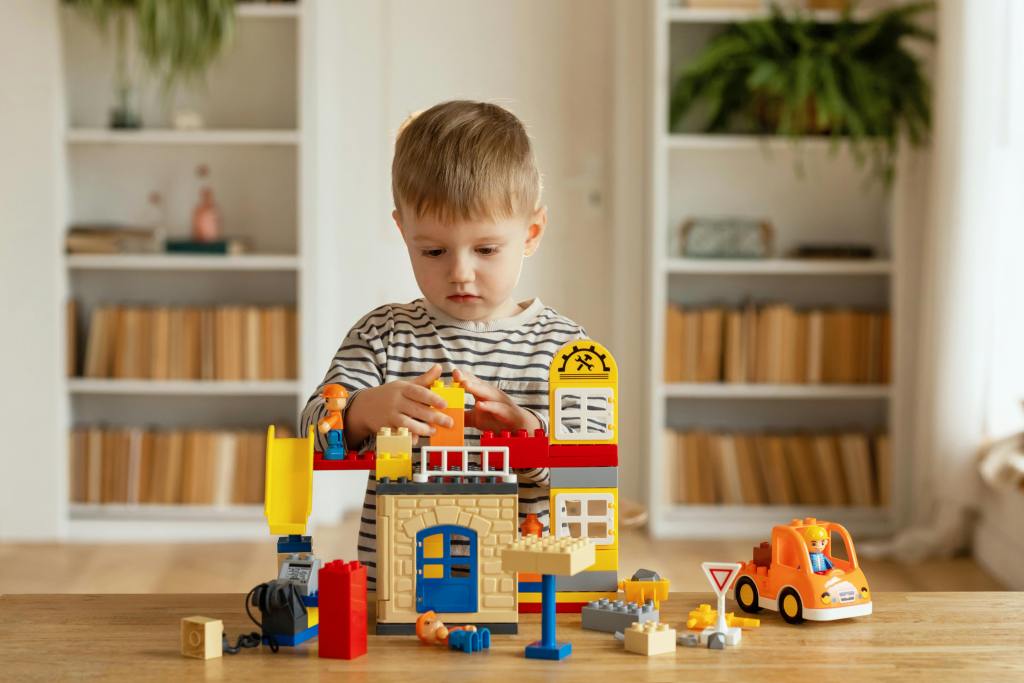
All learning starts in Play. The kind of play that engages a child’s mind, curiosity, imagination and productivity. Play that engages a child into challenge-seeking mode is reflects their undeveloped talents and type of “fun” unique to him/her. When that happens, the child is compelled to strategize, organize, problem-solve, and persist. You know from observing your child that they can and do seek challenges because it’s fun! Interest in music, numbers, art, gardening, crafts, pet-care, sports is most likely flowing from how they are wired to produce-rooted in the kind of SMART they possess.
I remember watching my youngest son draw spent much time drawing never-before seen characters in an outer-space kind of world. He hadn’t had any drawing lessons. The characters and their land were in his mind, and he wanted to see them on paper. Paper and pencils were available, so he got to work. Creating a drawing by setting a goal, using the resources available, utilizing free time, and taking the time necessary to finish the picture energized him. Successful completion of one drawing fueled to the motivation to create another.
Notice when and what your child is doing when attacking play he/she considers “fun” but challenging. Identify the different patterns of behavior when he/she engages in challenging play. This information can help you know how to manage compliance with challenging tasks he/she doesn’t like.
“O” stands for Objections

Objections to doing homework, home chores, or anything to be learned in the process of growing up are so frustrating! There isn’t a parent on earth that hasn’t wanted to pull their hair out when their kids won’t just do what is expected without a big ordeal!
The process of growing up and becoming independent involves gradually increasing power over one’s life. We want our children to develop that life-skill!
Yet, children don’t have the insight to know that certain skills and responsibilities must be learned to function successfully as an adult. They want power now! That’s how they try to get it.
We can all recite in our sleep the things our children remain unmotivated to do:
- getting up in the morning
- going to bed at night
- taking a bath
- limiting consumption of candy
- limiting screen time
- completing age-appropriate household chores
- completing homework
- (my all-time favorite) knowing what homework needs to be completed and when!
Often times the child is motivated-motivated to win control over the situation!
The trick is to generate motivation to sideline the objection: to kindle the “want to”.
“W” stands for “Want To”

Fostering a desire to “want to” seems impossible when your child thinks it’s “dumb” or “boring” or “useless” or “overwhelming”.
The nature of a child’s objections to challenges invoves attempts to win power. The process of growing up and becoming independent involves gradually increasing power over one’s life.
We want our children to develop that life-skill!
Yet, children don’t have the insight to know that certain skills and responsibilities must be learned to function successfully as an adult. They want power now! That’s how they try to get it.
We can all recite in our sleep the things our children remain unmotivated to do:
- get up in the morning
- go to bed at night
- take a bath
- limit consumption of candy
- limit screen time
- do age-appropriate household chores
- do homework
- (my all-time favorite) know what homework needs to be completed and when!
Often the child is motivated-motivated to win control over the situation!
The trick is to generate motivation to sideline the objectionwhen faced with challenges: to kindle the “want to”.
The following I call “tips’ because kindling the “want to” is an art, not an exact science.
Tip #1 Arguing with your child’s lack of motivation or resistance does not work. And how do I know that? Experience.
Tip #2 If you can’t get them to “want to“, attempt to get “I’ll try“.
Tip #3 Kids with special needs often don’t develop problem-solving skills spontaneously. These skills must be taught.
Weak problem-solving skills, which involves “task analysis ” can be the culprit underlying resistance to tackling a task.
Let’s start there.
I don’t know if Martin Luther King, Jr. was a great parent, but he offered good advice illustrating “task analysis” that applies here.
“If you can’t fly, then run. If you can’t run, then walk. If you can’t walk, then crawl. But whatever you do, you have to keep moving forward.”
Giving your child an example of how you do this in tasks you do not enjoy (for me it’s compiling tax info for the tax preparer) is helpful.
Giving them examples of how they already do this in play is important. Knowing they already exercise this skill in play can facilitate some buy in from them.
Demonstrate the process to break a task down. This can ratchet down the child’s objection that the task is daunting, time-consuming, and unachievable.
My youngest son exhibited his skill persist in the long, complex process to assemble a new Lego set.
One was a large pirate ship with a gazilion, tiny pieces. (I may be exaggerating a tad bit on the number of Lego pieces.) He knew the object to be assembled (objective of the task and “big picture”), then attempted to assemble the object without the instruction booklet. He then figured out that the instruction booklet was, in fact, necessary for building said pirate ship (both correction of a mistake, reformulating a plan using recommended resources).
He took the time necessary to finish the job (attacking the challenge). It all started with putting 2 of the gazilion Lego pieces together.
Excitement with a sense of accomplishment resulted when the pirate ship was completed.
If your child is any kind of physical, occupational, or speech therapy, this is the approach therapists use to achieve goals and build a sense of accomplishment and success. We can help kids break down a task into smallest of steps and complete one step at a time.
Since I am a retired Speech-Langauge Pathologist, I will pull an example of breaking down a task to an achievable steps.
Many children with special needs have difficulties with age-appropriate speech and language. Let’s say a child exhibits delayed language. The skill to produce a complete sentence is broken down into increasing smaller goals. (This is a skeleton example since a full explanation of the scaling down the goal requires multipl variables.) Each step is modeled first, followed by the child’s production with visual and or tactile supports, and finally the complete sentence is made upon a prompt.
- Produce one sound.
- Produce the individual sounds in a simple consonant-vowel-consonant word.
- Produce a one-word utterance: either the noun or verb.
- Produce a two words: noun and a verb.
- Produce a sentence with a noun and verb and associated articles, adjectives and adverbs.
This breaking down of any skill required for communication, self-care, life-skills, academic skills, or mobility can be segmented to increasingly less complex components.
Tip #3 Take breaks!!!
Math was very difficult for my son. He and I both needed a frequent breaks when I helped him with his most difficuct challenge: math homework. When his frustration reached a certain level, he would say “I need a break.” then went outside our house to walked up and down the sidewalk. After a few minutes he would come back in and try again.
Your child may not know a break is on option or how to signal the need for a break.
The “break” is best explained before a challenging task is required. Discussing this option after your child’s collapse into the pit of despair is possible but not usually fruitful.
And how do I know this? Experience.
3 steps for taking “breaks”;
- Reading a fun book about others who have persevered when things get tough is helpful in planting in their mind that others struggle, others overcome, and it’s just part of life.
- Explain “taking a break” what it means and doesn’t mean, if you haven’t already. It does not mean quitting when a task becomes challenging. It means putting the task on “pause”, letting your mind (if it’s academic work) or body (if it is physical work) rest and renew the determination to finish the task as best you can.
- Model the words to say for the child. Signs can be used if your child is non-verbal or minimally-verbal.
Breaks can range from a few minutes to a few days, depending on your child, the task and, situation.
“R” stands for Rewrite the Script

We’ve all heard our kids say things similar to:
- “That’s too hard.”
- “I just don’t understand that.”
- “I’m just not that smart.”
- “I’ll never use this (Concepts taught in English, Math, Science, etc.) when I get out of school.”
Dr. Kathy Koch writes and speaks about the 5 core needs of every child. These include security, identity, belonging, pur[pose, and competence. The two core needs we will focus on are “identity” and “compentence”.
Identity defines WHO I am.
Competence defines WHAT I do well.
Words recorded in Luke give us some insight in how to rewrite the scripts children have stored in their minds about their identity and competence.
“The good person out of the good treasure of his heart produces good…
for out of the abundance of the heart
his mouth speaks.“
Luke 6:45
The scripture from Luke highlights the fact that what we say is what we believe in our heart. The interesting thing is that the reverse is true. What we say to ourself influences what our heart believes.
Parents can rewrite the scripts of inaccurate words spoken by their child by engaging in selected fun activities and conversations. Both of these are intended to teach the child their true identity and giftedness. This “good treasure” about their identity and competence stored in their hearts become the scripts from which they draw strength.


Consider these 7 suggestions:
- Be completely present when having an intentional conversation. Putting your phone away and giving your child your undidvided attention communicates they are important. The chances of your child listening and being willing to converse significantly increases.
- Be a role model. Engage in challenging activities that are fun for both of you. Talk about the difficulties of that activity and how you overcame them. Allow time for your child to do the same.
- Be on alert for opportunities to have conversations about your strengths and weaknesses and how you manage them. Be on alert for the same for your child’s strengths and weakness and he/she thinks how best manage them.
- Be willing to talk regularly. One conversation will not rewrite the negative, non-productive scripts.
As I mentioned earlier, the POWER to manage challenges requires deciding to complete the task, breaking down the task in small manageable steps, putting those steps in a logical order, prioritizing, solving problems, ignoring distractions, correcting mistakes, and enjoying the progress.
Accessing POWER is an art.

You may be surprised how much confidence grows when children discover they really can keep moving forward. What other suggestions could you offer?
We’d love to hear them.







Leave a Reply